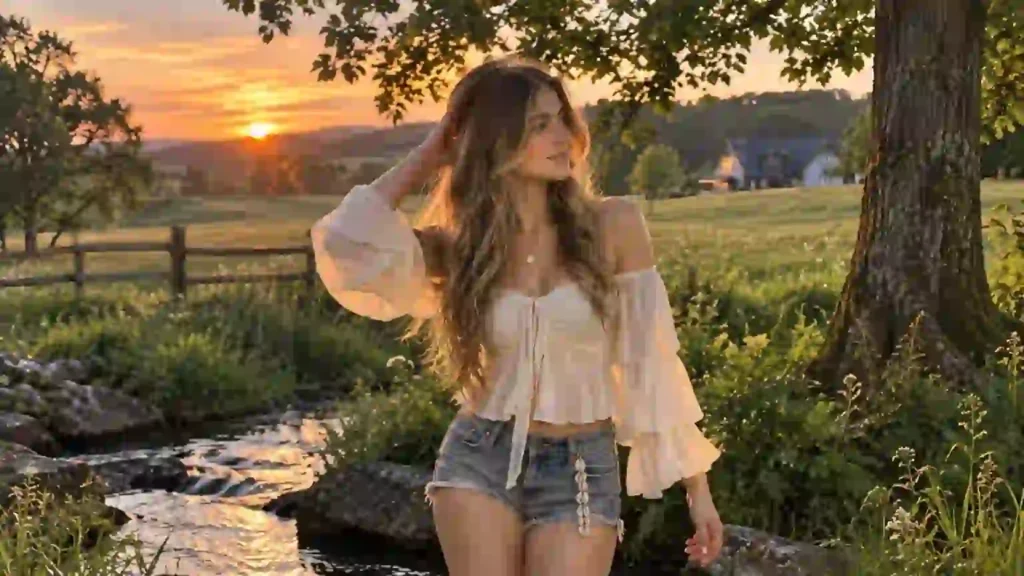
A photoshoot is different from a concert or a rodeo. You’re not dressing for a crowd or for all-day comfort. You’re dressing for the camera and the mood. Things that look great in the mirror can wash out on film, and clothes you’d never wear in the heat might be perfect for twenty minutes of golden-hour shots. What really matters here is the texture, movement, and color that will look good on camera and complement your location.
This guide is about how to choose colors that either blend into your surroundings or stand in contrast. Clothes that look beautiful in photos. How to coordinate with a partner or group, and outfit ideas for western shoots for seniors, couples, families, and just for fun. The goal is photos you’ll actually want to print.
what to wear for a western summer photoshoot
For a Western summer photoshoot. Choose a flowing dress or a denim and simple top look. In a color that either blends into your surroundings (natural hues for the desert and grasslands) or stand in stark contrast to it (a deep, eye-catching color). Add a wide-brimmed hat, boots or Western sandals, and one or two Western accessories. Turquoise jewelry, an embossed belt, a bandana. Prioritize texture and movement over busy patterns.
The rule behind it all: wear clothes for how they look on camera and with your location, not for how practical they are to wear all day
The rule: dress for the camera and the location
A photoshoot outfit is decided by two questions, and neither of them is “is it comfortable to stand in”
- How does it look on camera? Texture and movement photograph beautifully; messy tight patterns, big logos, and flat, shapeless fits do not. Solids with interesting fabric or pieces with subtle designs win.
- How does it play with the setting? Your outfit either blends into the scenery for a cohesive, editorial feel or contrasts with it so you clearly remain the main subject. Both are fine. Just choose intentionally.
Get these two things right and almost any Western outfit will yield great photos.
Blend or stand out? Choosing your colors
This is the single biggest decision, and it depends on your backdrop:
- Blend (earthy tones). Brown, tan, rust, olive, cream, and denim blue melt into a desert, prairie, or ranch setting for a warm, timeless, cohesive image. Ideal for groups and a soft, natural mood.
- Stand out (one bold color). A rich red, deep teal, turquoise, or a saturated dress creates striking contrast against sandy or green landscapes and reads editorial. Best for a solo or statement shot where you’re the focal point.
A few summer-light notes that matter outdoors:
- Shoot at golden hour (the hour after sunrise or before sunset). Midday summer sun is harsh and casts hard shadows.
- Pure white and pale pastels can blow out in bright sun — if you want white, lean cream or ivory and shoot in soft light.
- Warm earthy tones glow in golden light; that’s why they’re the western-photo default.
Fabrics and movement that photograph beautifully
The camera loves texture and motion:
- Flowy dresses and skirts. A midi or maxi gives you something to hold and move, creating natural motion and shape in the frame — perfect for senior and solo shots.
- Fringe. It moves as you move and catches light, adding energy to a photo without any effort.
- Mixed textures. Denim with lace, suede with cotton, a knit with leather — combining textures reads richer and more dynamic than a single flat fabric.
- Fitted where it counts. A defined waist (a belt, a tuck, a fit-and-flare shape) keeps your silhouette on camera; head-to-toe loose can read shapeless.
Coordinate with your location
Pick your palette to suit the backdrop:
- Desert / cacti / cliffs. Earth tones blend, or a denim dress or bold color pops against the sand.
- Sunflower or wheat field. Cream, denim, and soft earth tones sit beautifully in the gold; a deep blue or rust stands out.
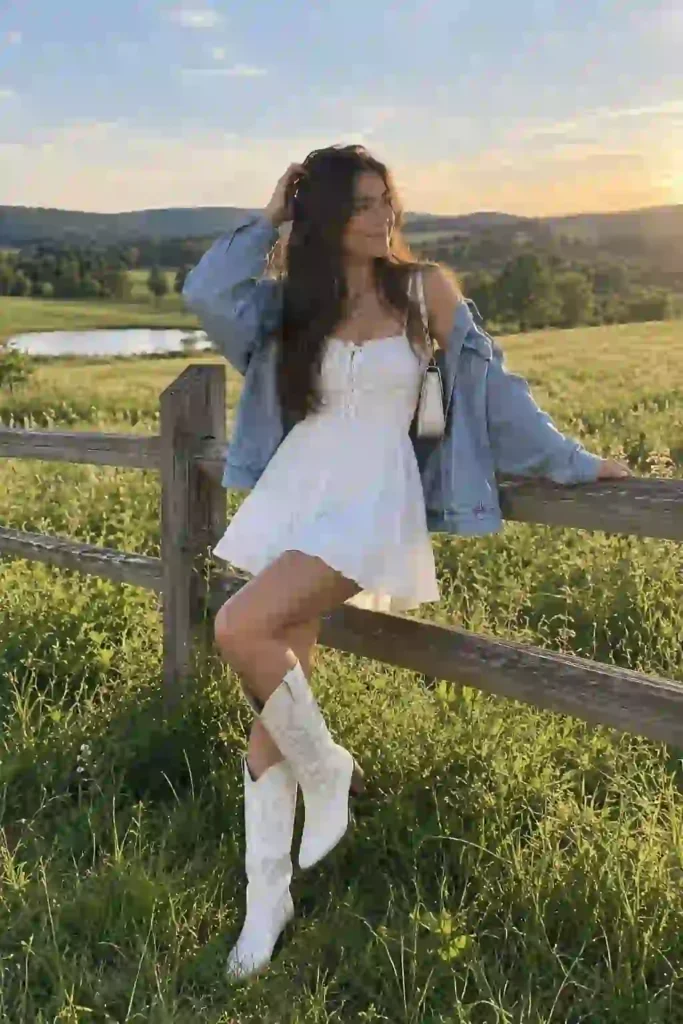
- Golden-hour ranch or fence line. Warm neutrals and denim glow in the light.
- Green forest or open field. Rust, cream, cocoa, and deep reds contrast the green richly.
Western summer photoshoot outfit ideas
- Senior / Single. A flowy floral or earthy-toned midi dress with boots, a wide-brimmed hat, and turquoise jewelry. The skirt gives you mobility for work and the hat instantly adds a different vibe.
- Couple / Engaged. She wears a flowy dress with boots; He wears jeans. A crisply ironed button-down shirt and a cowboy hat. Same color palette, different fabrics — coordinated, not matching. Denim-on-denim is a great non-white option and you don’t have to wear white.
- Family / Maternity. Denim and neutral tones throughout the group so no one picture dominates and everyone interacts naturally with each other instead of staring at the lens. Holding hands, looking at each other. Warm and personal.
- Solo Beauty / Content. A sheer or fitted top, ripped high-waisted jeans, cool boots, and a colorful wide-brimmed hat (photos with deep yellow, teal, or light blue have real character). For a second look, wear a fringe cardigan or a patterned coat.
- Statement-Dress Editorial. A gorgeous, dark, multicolored dress that contrasts with the landscape. Paired with simple Western accessories boots and a hat. Pose next to a horse or looking off in the distance for an editorial mood.
- Boho Prairie. A cream or floral prairie dress paired with a denim jacket or leather vest, delicate layered jewelry, and a straw hat. Soft, romantic, and made for golden fields.
Build variety into one outfit
A well-chosen outfit can give you many different shots. This is useful when golden hour time is short:
- Wear a hat, take off a hat. Two different moods instantly.
- Add or remove a layer. A denim jacket, leather vest, or fringe cardigan changes the whole feel.
- Tuck in or untuck; wear a belt or take it off. Small changes that look different on camera.
- Bring a backup piece. A second top or a standout accessory doubles your looks without changing the entire outfit.
Coordination for a couple or group
Coordinate, don’t match. Choose a palette—light browns, denim, cream, and light greens work beautifully outdoors—and let each person wear different pieces and textures within it. Wearing identical clothes looks conspicuous; A shared palette with individual pieces looks flattering and natural. Have the group stand close together, place taller people on the outside, and prioritize conversation over a straight line of faces.
Tips for the Day of the Shoot
- Book the golden hour and confirm the direction of the light with your photographer.
- Plan for the wind. It blows in open fields. This is great for hair and flowy clothes but not for the hat you don’t want to see flying away. Pin it down and bring a comb.
- Sunscreen and a touch-up kit. Blotting papers, a mirror, and lipstick are very handy between frames.
- Bring options. Two or three outfits and some accessories give you and your photographer room to experiment.
- Wear clothes you can move around in easily. The best Western photos have motion—walking, turning, catching a skirt—so choose outfits you can actually move and pose in.
What not to wear on camera
- Busy, tight patterns. Small stripes and checks can shimmer or vibrate on camera. Choose solids or larger, softer prints.
- Big logos or slogan graphics. They date a photo and pull the eye. Keep graphics subtle or western-illustrated.
- All-black in shadow. Black can lose all its detail in low or dappled light — add texture or a lighter piece.
- Head-to-toe loose, shapeless fits. Define the waist so your silhouette reads.
- Neon or very cool bright tones. They can cast color onto skin; warm and earthy photograph more flatteringly outdoors.
Frequently asked questions
What should I wear for a western photoshoot?
A flowing dress or a denim-and-simple-top look, in a color that complements your surroundings. Earth tones to blend into the desert or plains, or a striking color to stand out from the crowd. Pair it with a wide-brimmed hat, boots or Western sandals, and Western accessories like turquoise jewelry or a bandana. Prioritize texture and movement over busy patterns.
What colors photograph best for a western shoot?
Earth’s neutral colors—brown, tan, rust, olive, cream, and denim blue—blend beautifully with Western landscapes and glow in the golden-hour light. For contrast, a deep red, dark teal, or turquoise pops against sandy or green backgrounds. Pure white and light pastels can wash out in bright sunlight, so use cream or ivory in softer lighting.
What should couples wear for western engagement photos?
Coordinate without matching: she can wear a flowy dress with boots while he can wear jeans, a button-up shirt, and a cowboy hat. Both in the same color palette. You don’t have to wear white. Denim-on-denim and earthy tones look great. And adding turquoise or Navajo-inspired accessories makes the look even more Western.
How do I make my outfit stand out in western photos?
Choose a deep, saturated color that contrasts with your landscape. Keep the rest of the look simple and add movement with a flowing skirt or fringe. Texture and a defined waist help accentuate your silhouette, and shooting in the golden hour makes the bold color and warm tones pop even more.
What should you avoid wearing in a photoshoot?
Avoid busy, dense patterns, large logos, or slogan graphics that glare on camera. Avoid all-black outfits that lose detail in low light, head-to-toe shapeless, baggy clothes, and neon tones that wash out skin tones. Solid colors, textures, natural or bold intentionally chosen hues, and shots with a defined waist look best.